Le Petit Musée du Vin. An interactive museum journey, in 7 languages
Turning a spec sheet into a gamified museum experience: opened on the planned date, and run independently by the team.
Visit the website ↗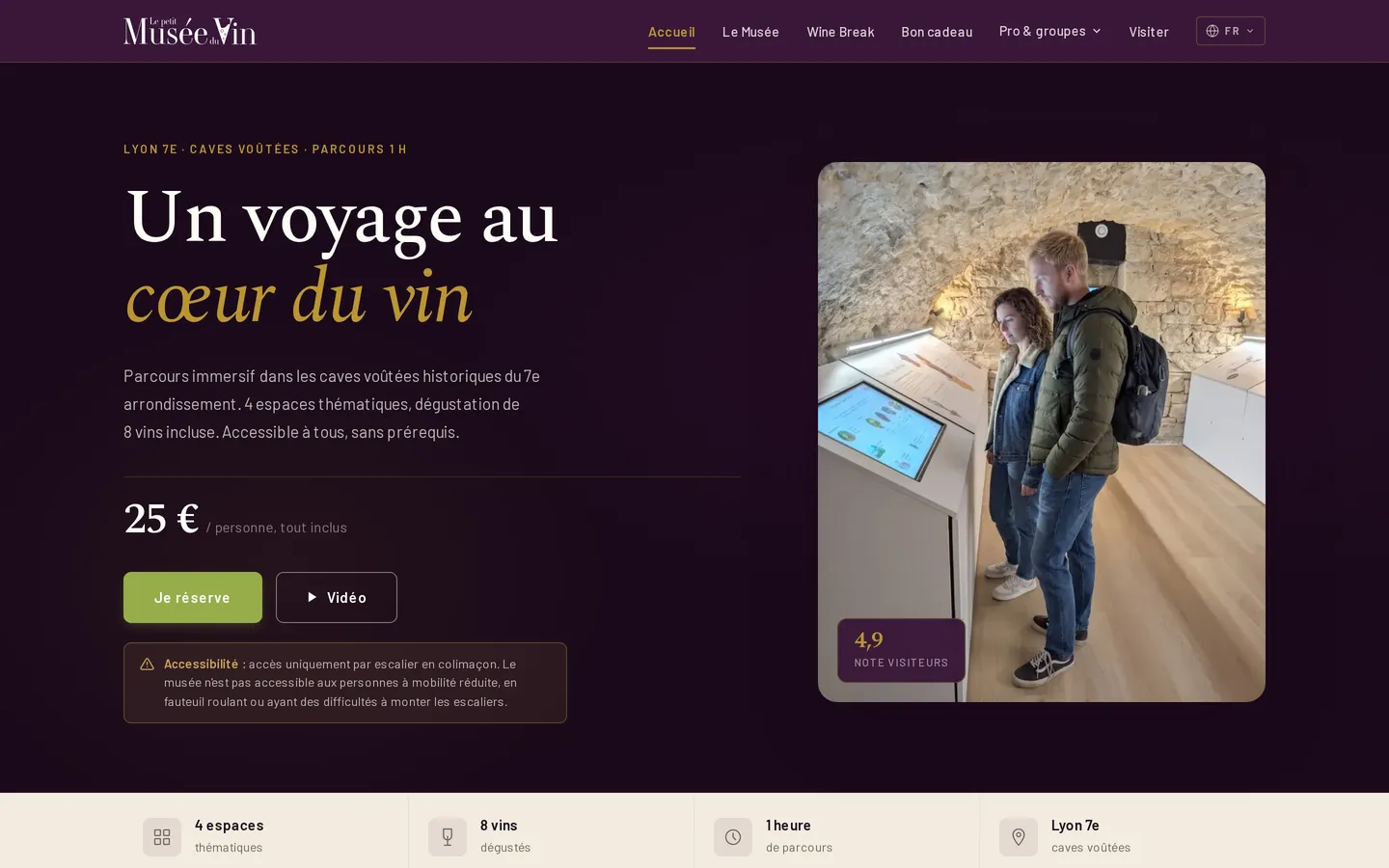
Lyon's only wine museum wanted an interactive journey, the opposite of text panels: a Duolingo-style initiation into wine, playful and accessible to beginners. We designed and built the entire digital experience (multilingual interactive journey, an edit mode for the team, audience measurement) under three locked constraints: a non-negotiable opening date, a capped budget and a demand for independence.
The context
Tucked into vaulted cellars in Lyon's 7th arrondissement, Le Petit Musée du Vin was preparing to open with a precise vision: introduce wine to complete beginners in a lively, interactive way, without the traditional text panels. The team's openly stated reference: Duolingo's approach, which teaches through play and engagement.
Three constraints were set in stone: a non-negotiable opening date, a capped budget, and a strong requirement: staff had to be able to update content themselves, without depending on a developer.
The starting point
The museum arrived with a detailed specification and part of the content already written. But the entire technical side was still to be built: no platform, no wireframes, no content management tool, no interactive media.
Our role: turn a documented vision into a complete, reliable system that the team could keep alive on its own.
Our response
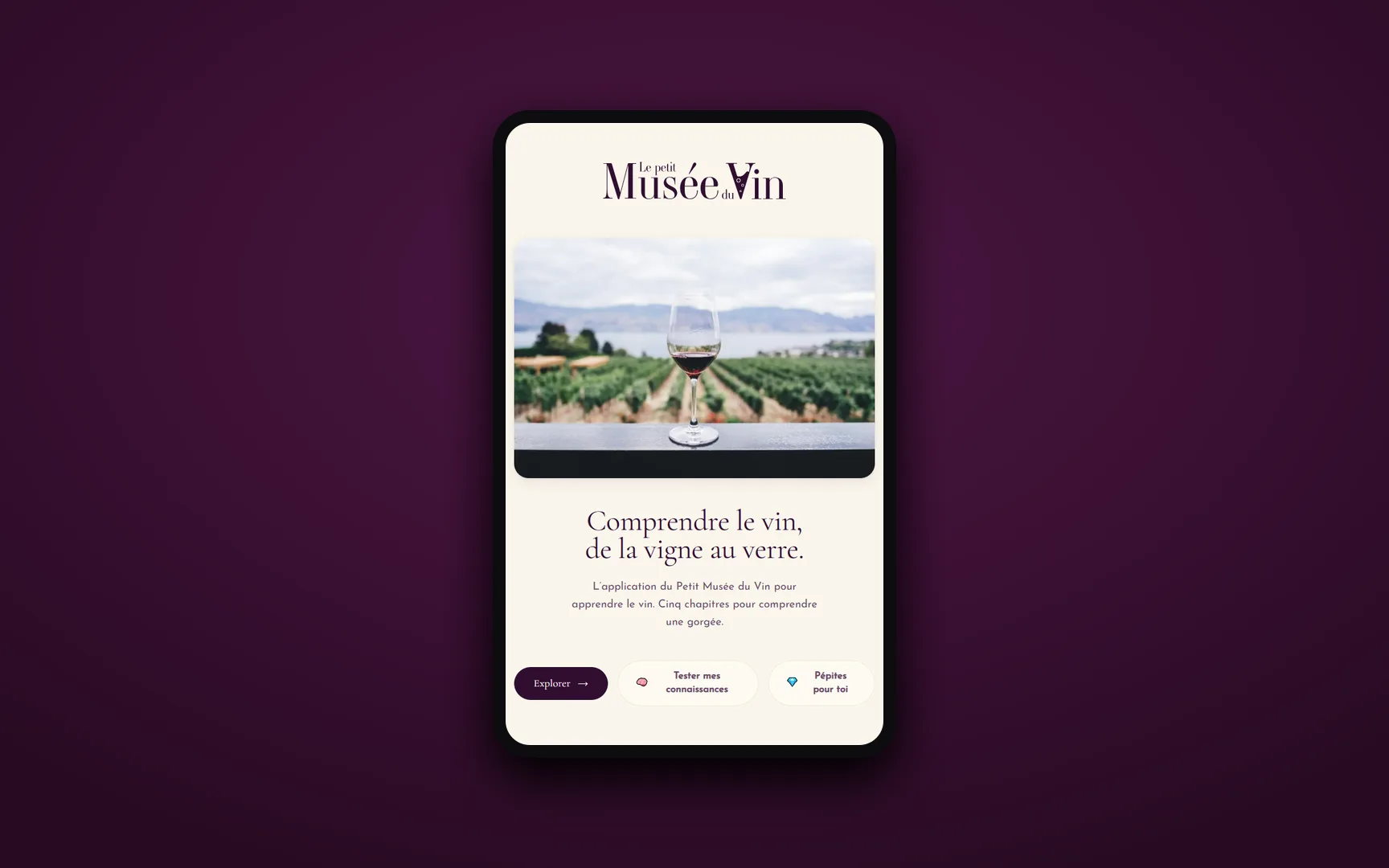
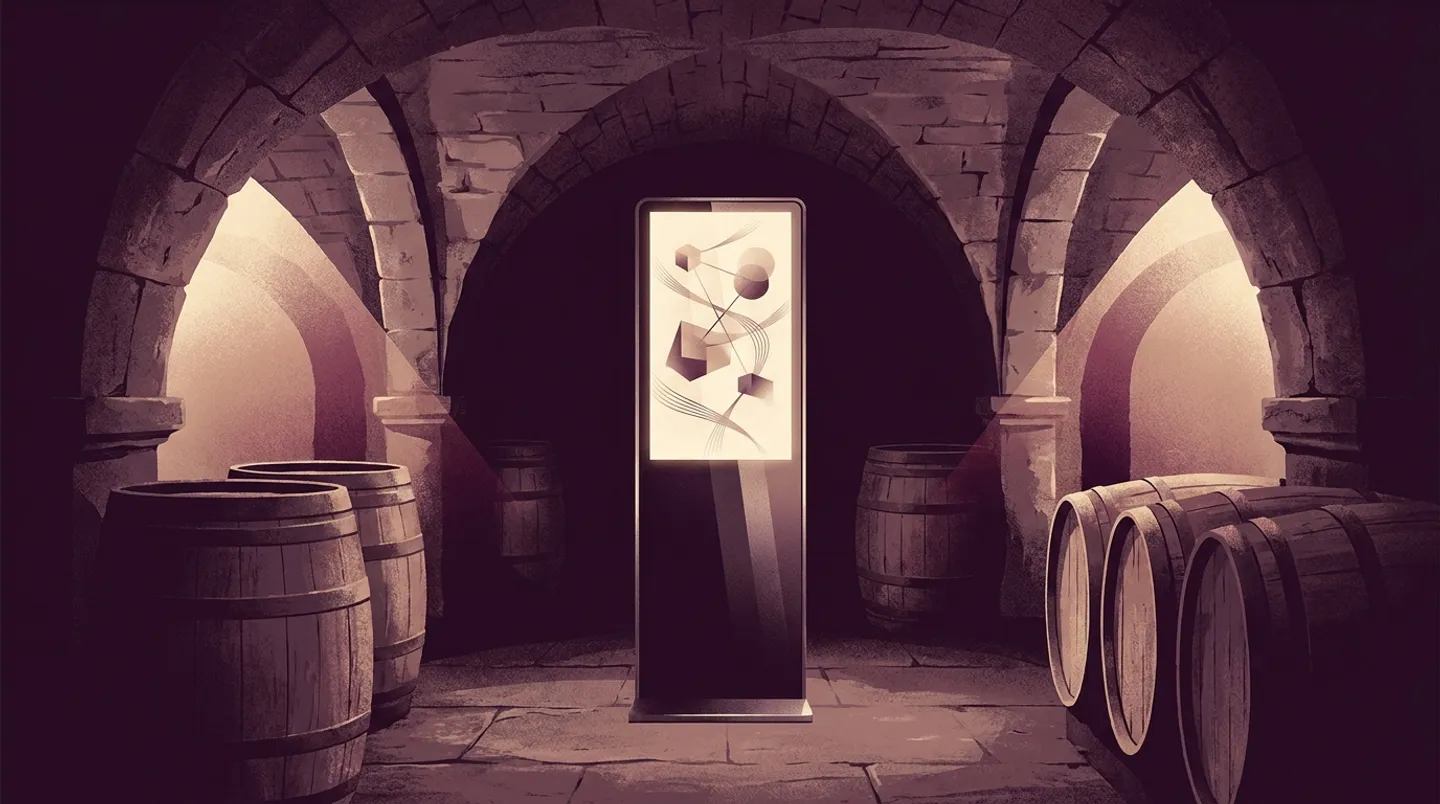
We designed a journey of 14 interactive modules covering wine from soil to tasting, in 7 languages (French, English, Spanish, German, Italian, Portuguese, Dutch). The experience runs on touchscreen kiosks in an offline-first mode: everything is stored locally, so nothing depends on an internet connection.
Each module blends interactive visualisations, quizzes and educational mini-games: you learn by doing, not by reading. And above all: a built-in edit mode lets staff change text, images and videos without calling us.
The “Spin the Terroir” challenge
One module took the form of a three-reel slot machine (soil type, climate, vineyard management) generating a different wine profile with each combination. The challenge: make over 300 combinations feel believable rather than random.
Our solution: a structured outcome system (win, jackpot, loss) with an educational explanation for every spin. The visitor understands why a given soil and climate yield a given wine, instead of enduring a random generator.
The 7-language puzzle
Handling 7 languages isn't just translating: German text is often 30–40% longer than its French equivalent, and a button that's perfect in one language overflows in another. We built flexible interface components with adaptive spacing, tested in all 7 languages from the design stage. The interface stays readable and balanced whatever the visitor chooses.
The measured results
The museum opened on the planned date. Over the first month, nearly 2,000 visitor sessions were analysed: ~3 minutes spent per module on average, up to 12–13 minutes on the most complex modules (fermentation, ageing), and a 97% quiz completion rate. Counter-intuitively, the densest topics held attention the longest, because they were interactive.
On the operational side: zero downtime since opening (including offline) and a team that updates its content entirely on its own. Usage data now feeds a dashboard that helps the museum decide which modules to expand and which languages to reinforce.
« The explanations are playful, interactive and available in several languages. Really well done, for young and old alike. »
Want to do the same for your brand?
A first conversation is enough to see what we can build together.