
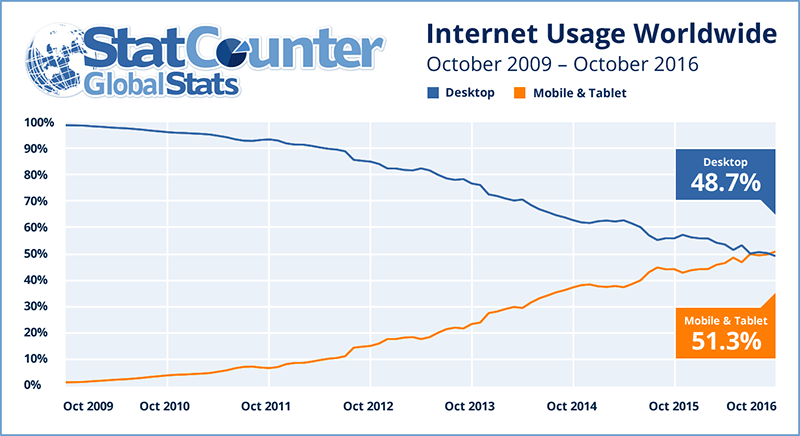
A StatCounter study dated 1 November 2016 recently confirmed the trend: the number of Google searches carried out on desktop computers is now slightly lower than the number performed on mobile devices.
Google has decided to respond accordingly.
Mobile search results on the rise
Since 2009, searches on mobiles and tablets have increased steadily, while desktop searches have been slowly declining. It therefore comes as no real surprise to see the curve beginning to reverse.
On one hand, before the arrival of smartphones and then tablets, desktop computers were the only tools that gave access to the internet — and therefore to Google. Searches on the famous search engine were, logically, carried out exclusively on desktops. These are now being challenged by tablets and mobiles.
On the other hand, internet use on mobile is expanding and growing regularly.
This is of course a global average that StatCounter studied. But the study nevertheless confirms these figures. 48.7% of searches on Google were made from a desktop computer in October 2016, while searches on mobiles and tablets accounted for 51.3%. And the trend looks set to continue for some time yet.
Google splits its search index
To follow the trend, Google has decided to clearly divide its search engine into two distinct versions.
On one side, the primary version for mobile — now Google's priority — which will be updated swiftly.
On the other, a secondary index for desktop computers.
According to Gary Illyes, a well-known Google trends analyst, this change would arrive in the months ahead, resulting in the desktop version of the engine being updated less quickly than the mobile one.
This is set to shake up the web considerably. Website owners will now need to prioritise the mobile versions of their sites.
Since April 2015, Google has already favoured mobile-friendly sites. Sites that offer easy-to-tap links on touchscreens, for example, gain visibility more easily and rank better than their counterparts in Google search results.
This new approach from the famous search engine is therefore simply a continuation of the policy already in place.
A better-adapted search engine
Splitting its engine into two versions would allow Google to optimise its tool and the user experience.
This should make it less common for mobile users to click on a site only to find one that is not adapted for them.
Until now, the mobile ranking algorithm was based on desktop content data. It will now be able to operate differently, drawing on mobile content.
Using a responsive site (automatically adapted to all screen types) is therefore becoming increasingly essential.
It is both what users want — for a seamless user experience — and what Google wants to encourage. It is also worth keeping in mind that the user trend is towards mobile, and that it will undoubtedly continue in this direction in the years to come. Adapting to smartphone users today means securing your online visibility as quickly as possible.