
Since 2014, Google has been placing ever greater emphasis on the measures we put in place to secure our websites.
Google does indeed favour the web ranking of secure sites. To achieve this, you need in particular to obtain an https URL, which proves that the site in question is safe.
To obtain such a URL, you need an SSL certificate, which is normally paid for, though free equivalents can be found.
What is an SSL certificate?
An SSL (Secure Socket Layer) certificate is a data file that links your site's information to a cryptographic key, and therefore encrypts data to protect it.
Once installed on your server, the SSL certificate activates the padlock and the "https" protocol in browsers. This establishes a secure web connection between your server and the browser used by your visitors.
This certificate is essential for building your visitors' trust. In particular, it helps to secure banking transactions, which are increasingly common on e-commerce sites. In the same vein, an SSL certificate protects your users' login credentials and passwords.
Moreover, from the user's perspective, an https address shows that you are indeed the owner of your site and that your business genuinely exists. In this respect, it is the equivalent of a web identity card for your company.
Website protection and better search rankings
In terms of web ranking, as mentioned, Google now prioritises secure sites. They therefore enjoy greater visibility.
Since January 2017, Google Chrome also indicates which sites are secure and which are not.
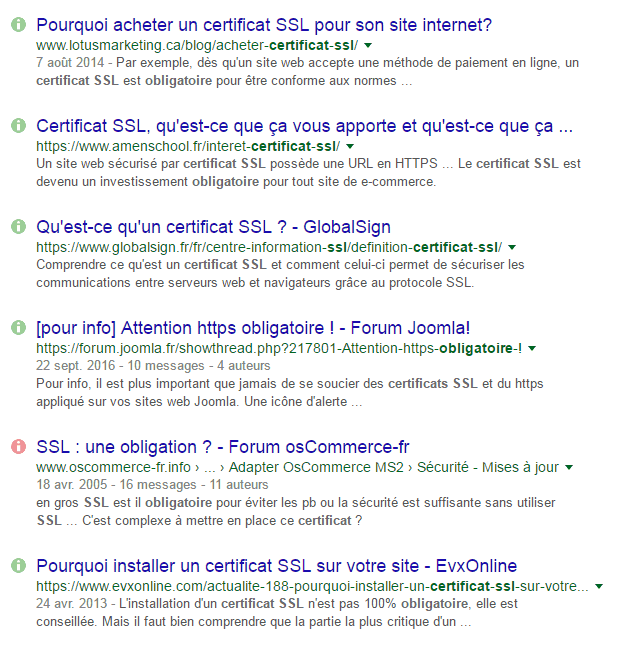
As the internet is used increasingly for personal and sensitive data, website protection is becoming a priority. Using an SSL certificate can already be considered essential for your website, especially if banking transactions are carried out on it.
Http5000 ensures the creation of a secure website on request, having the necessary expertise to integrate an SSL certificate on a server.
Furthermore, our maintenance contracts allow you to keep your site up to date with ease, without needing to know how to code or spend time on the regular updates required by your CMS.