
What is a promotional item?
Advertising through merchandise is a fully-fledged form of advertising, on a par with a poster or a television commercial. The advertiser gives their target audience an object that symbolises the brand, bearing its name, slogan, and/or colours.
Whilst the promotional item can take an enormous variety of forms — from textiles to stationery and all manner of accessories — it must always meet two indispensable criteria. It must be marked with a permanent advertising message and given to the target audience free of charge, with no prior conditions attached.
The fundamental objective of any advertiser who wishes to use merchandise-based advertising is always the same:
the goal is to find the item or items with the highest advertising mileage — that is, items with a long lifespan, so that the brand name and message become more and more deeply embedded each day in the minds of the target audience and those around them.
Although it is given free of charge, the promotional item must not be confused with a simple gift, which may carry no message at all. A gift that bears neither the brand's name nor its slogan has zero advertising mileage. If you are going to give something to your clients and prospects, it might as well be promotional!
How do you choose the right promotional item for your target audience?
When it comes to choosing a promotional item, many factors come into play. The nature and quality of the product, its usefulness to the target audience, and the message it conveys — nothing should be left to chance. There is no such thing as a perfect promotional item for every business and every audience; each advertiser must analyse the behaviours and habits of their target audience in order to offer them a suitable item that will deliver the best possible advertising mileage. For example, one would avoid giving branded lighters to a non-smoking audience. Similarly, sunglasses would be the right choice in California, whereas gloves make more sense in Alaska.
Paying careful attention to the quality and design of promotional items is essential in order to maximise the chances that the target audience will not throw it away, but keep it — and ideally use it and display it in public. However, one must find the right balance between originality and usefulness. A useless item will deliver no advertising mileage, just as an overly generic item given by numerous different companies will not. Imagine a prospect receiving five diaries or calendars from five different companies for the year 2016–2017.
All five products will simply not get used — the recipient will probably pick one based on quality, practicality, colours, or other personal criteria, and throw the rest away.
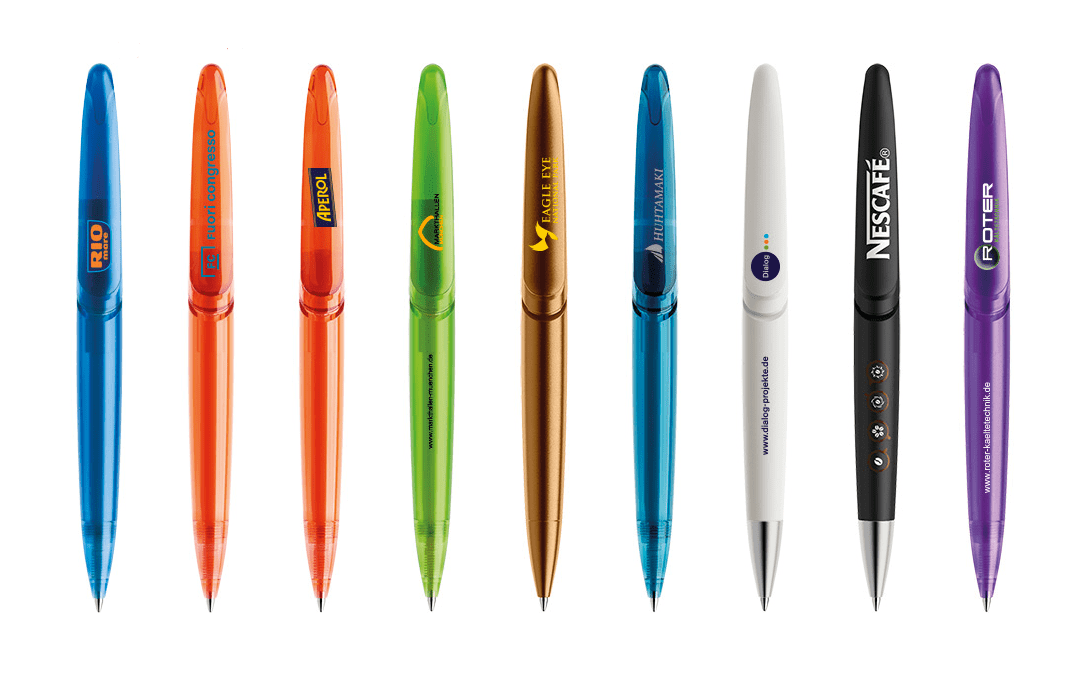
Making an impact on the target audience by playing on the unexpected is often the challenge advertisers face. Opting for something highly original can be impactful, provided the target audience is very specific. A company giving American tourists branded French electrical plug adaptors at an airport is a good example of how originality can succeed. This is a rare choice of promotional item, yet its usefulness is undeniable and the appreciation from the target audience is obvious. An advertiser can also choose a more conventional item and stand out through the message. For example, a French promotional merchandise consultant once gave a high-quality pen to his audience, engraved with the words: "This pen belonged to Company X — it now belongs to a friend." It is therefore clear that a well-chosen promotional item generates a far greater impact than a simple business card.
What are the major advantages of promotional merchandise over other media?
Advertising through merchandise has many advantages over other media such as television, radio, outdoor advertising, or direct mail. The first power of the promotional item is its guaranteed ability to capture the target's attention, because the target is static. Outdoor advertising is aimed at a moving audience who may briefly glance at the message as they pass by in the street. Television, on the other hand, addresses a supposedly static audience — but one that very often pays no attention to advertisements, and over which the advertiser has no control in terms of audience segmentation.
Promotional merchandise is highly effective at bringing an advertiser and their audience closer together, creating a connection and a sense of goodwill that no other medium can generate. The item passes from hand to hand, giving the recipient a feeling of privilege that naturally prompts a "thank you." Do we ever thank companies for showing us their advertisement on television or on a billboard? No — advertising through merchandise is the only form of advertising that generates genuine appreciation from the audience.
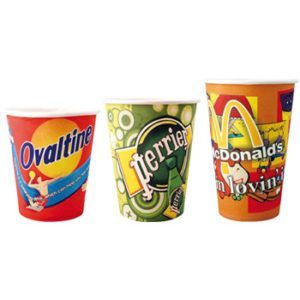
Unlike direct mail, for example, promotional merchandise creates no waste — direct mail involves considerable material waste from discarded envelopes and addressing errors. Furthermore, if well chosen, it has a very high advertising mileage, as it can be used or seen by the target on a daily basis — a high-quality, refillable pen, for instance. Investing in a relevant promotional item is therefore the equivalent of renting a small space on each target's desk.