When it comes to paper, do you often get lost between A1, A4, A5 and other formats? Is A3 larger or smaller than A4, again? And which format is right for an advertising poster, a roll-up banner, or a leaflet? Look no further — we explain everything you need to know about print formats right here.
A0 paper format
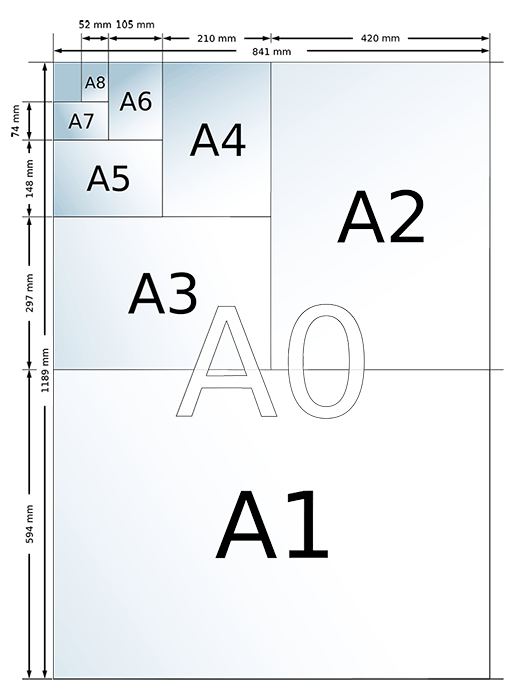
It may come as a surprise at first, but the A0 format does indeed exist. And it is the largest format in the A series. Of course, outside this nomenclature, a sheet measuring more than a metre is perfectly possible. In fact, an A0 sheet is one metre long — more precisely, 84.1 × 118.9 centimetres. It is obviously a format used for printing posters, large-format sheets, or even banners and roll-up stands. A cultural anecdote: the A0 format derives from the Aigle format (72 × 106 centimetres) established by Napoleon Bonaparte.
A1 paper format
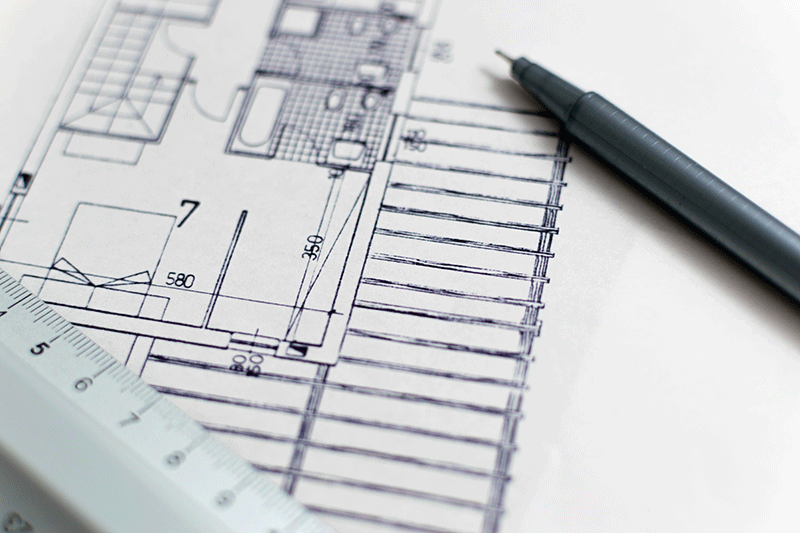
The A1 format is twice as small as A0. This is an order that is hard to remember, because our instinct often tells us that the higher the number, the larger the corresponding object. Yet here it is entirely the reverse: the closer you get to A5, the smaller the sheet will be. The A1 format is used primarily for printing event posters, display posters, architectural plans, and even road signs. We owe this A1 format to Professor Lichtenberg in the 18th century. The A standardisation system we know today did not alter Lichtenberg's measurements. Thus, for centuries, the format of 59.4 × 84.1 centimetres has existed unchanged.
A2 paper format
The A2 format measures 42 × 59.4 centimetres. It is therefore twice as small as the A1 format. It is widely used in the advertising sector for printing posters, advertising panels, and even large calendars.
A3 paper format
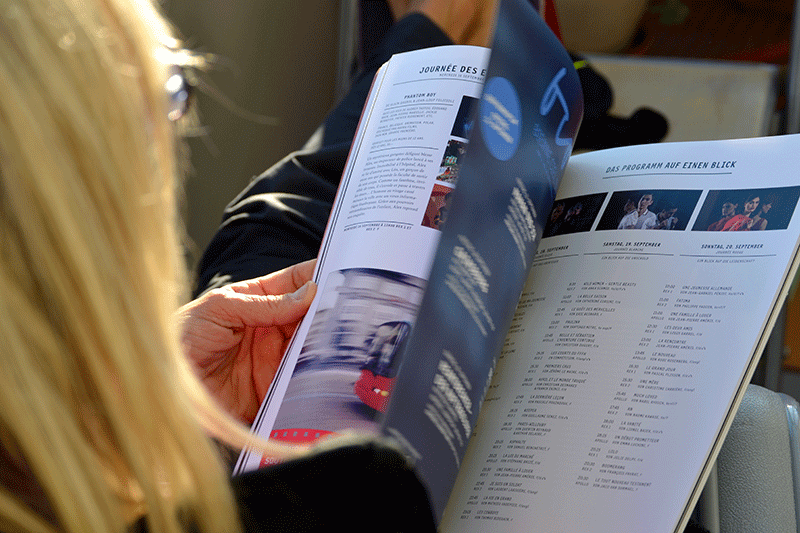
Smaller than A2, the A3 format measures 29.7 × 42 centimetres. This widely used format is primarily used for posters, plans, and leaflets. It is also used for magazines (by folding A3 sheets in half) and brochures, making it one of the most widely used formats in the A series.
A4 paper format

This one needs no introduction, being the most familiar format to the general public. It is the standard format for a letter or a sheet printed on a personal printer. This format is used for small notices, menus, magazines, flyers, leaflets, folded folders, and many other variants. Its dimensions of 21 × 29.7 centimetres make it the ideal tool for both personal and professional use.
A5 paper format
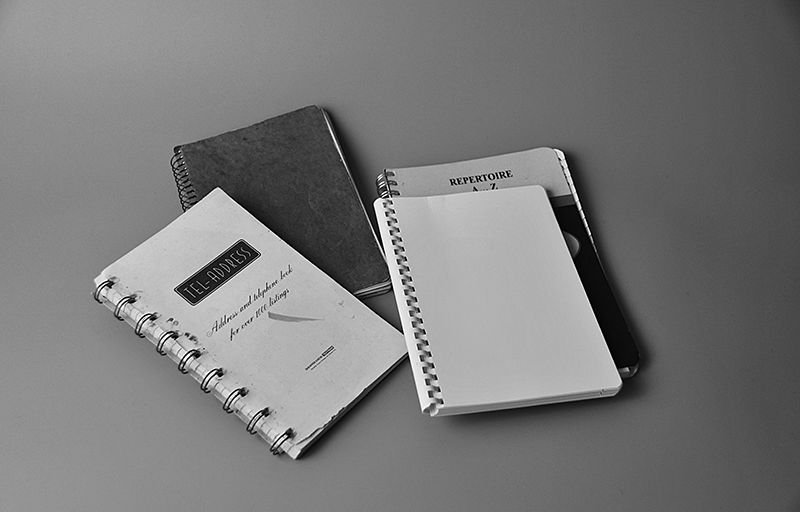
Finally, the A5 format is used primarily for printing flyers, greeting cards, booklets, and invitations. Measuring 14.8 × 21 centimetres, this format allows for easy distribution.
Other paper formats
The A series of paper formats goes all the way to A10, with each size smaller than the previous one. It is also worth noting that B and C formats exist. B formats, also ranging from B0 to B10, are slightly wider than A formats. C formats, on the other hand, are used to define the sizes of envelopes. There is a convenient equivalence: a C4 envelope is suitable for an A4 sheet of paper. Finally, while these are the standards broadly used around the world, they are less common in Canada and the United States, where an entirely different system exists, with Half Letter, Letter, Legal, Junior Legal, and Ledger formats. The Letter format is the closest equivalent to A4, though not a perfect match.
Understanding paper formats
As we mentioned above, it is common to get confused about paper sizes. An A5 sheet is often considered larger than an A4, when in fact the opposite logic applies. Why is an A5 format smaller than an A4? To understand this, you simply need to revisit the explanation behind these names: why A0, A1, A2, and so on? It is actually quite straightforward. The first paper format was A0, the largest. To create an A1, you cut an A0 sheet once. For an A2, you divide the A0 format twice. For an A3, three times, and so forth. The number directly corresponds to how many times the original format, A0, has been halved. You can also explain this in reverse: an A5 is half an A4, which is itself half an A3, and so on up to A0, the largest format. Thus, the higher the number, the smaller the paper format.